

About Mörrums Kronolaxfiske
Mörrums Kronolaxfiske is one of northern Europe's leading destinations for fishing experiences and is home to some of the country's foremost water conservation experts.
Fishing stories from 1231 to present day
The salmon fishing in Mörrum has very historic traditions and I described for the first time as early as the year 1231. Today, Mörrum is visited by anglers from every corner of the world. They come here hoping to catch one of the extremely well developed salmon or sea trout that are our hallmark. With 10,000 “fishing days” and 250,000 visitors to Laxens Hus we generate approximately 50-80 million Sek per annum, in income for the local area. This makes us one of Blekinges largest and most visited tourist attractions.
Among large salmon and the world's largest trout
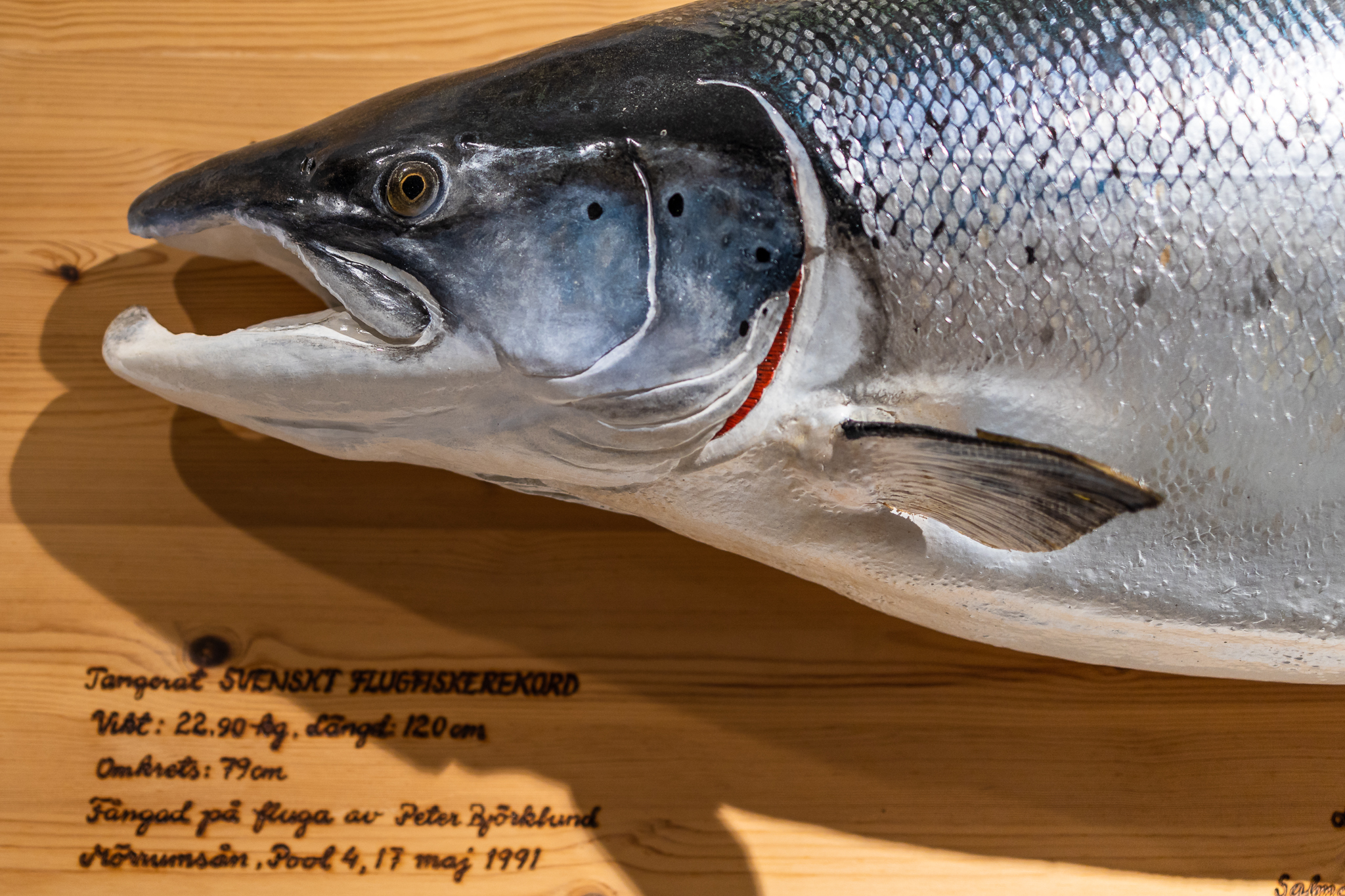
The wild salmonoids that are present here make Mörrums fishing unique. Every cast is a potential world record. In 1993 the world record was set here, weighing in at 18,36kg. Many salmon topping 25kg have been caught down the years.
The wild salmonids makes the fishing at Mörrums Kronolaxfiske unique. Each cast is a potential world record. In 1993 the world record was set here, weighing in at 18,36kg and on display in our exhibition. In addition, several record salmon have been pulled up over the years, where several of them are also on display in the exhibition.
World Class Conservation of Fish
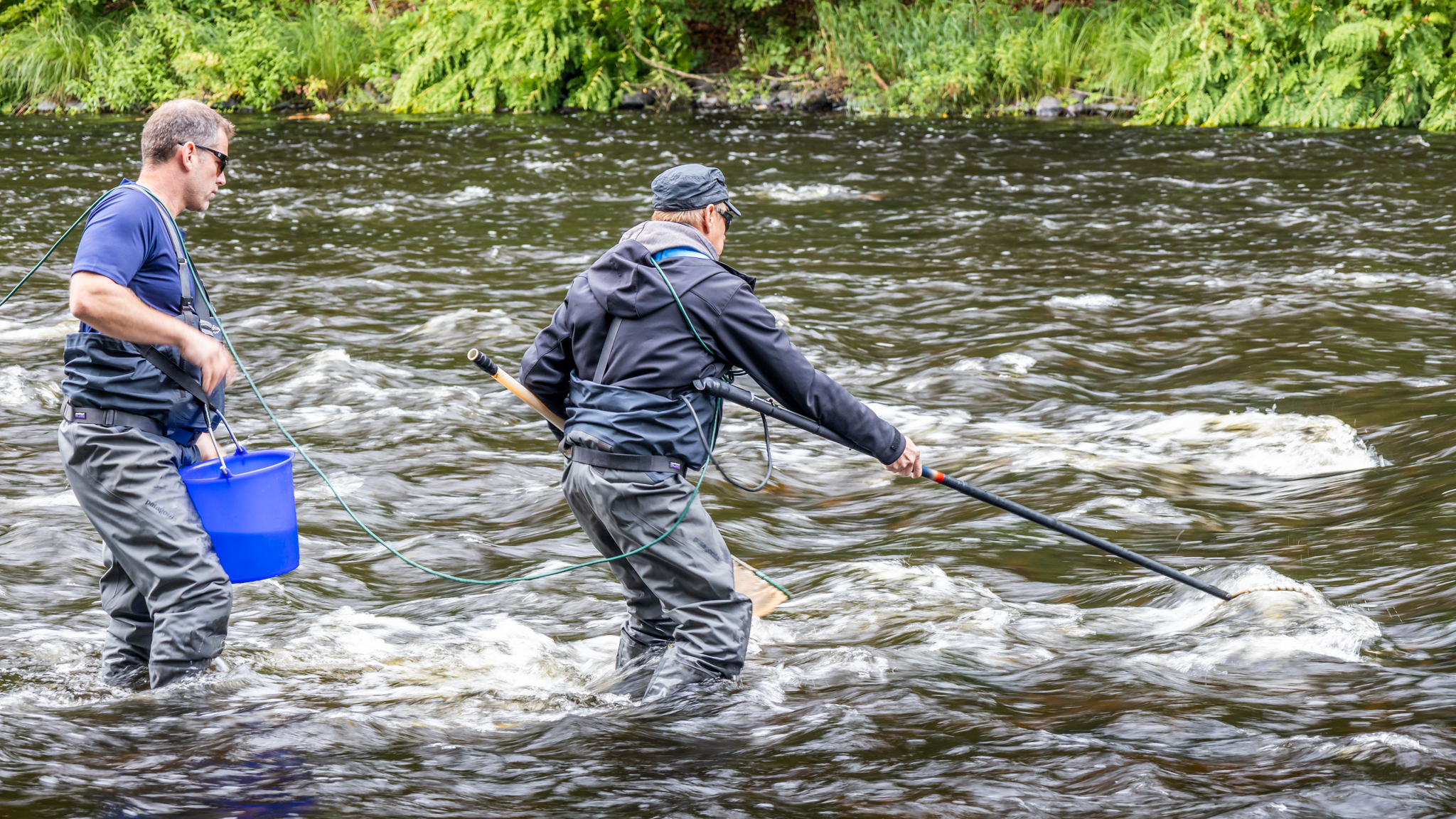
We are working towards achieving a long term, durable stock of Salmon. During the 2012 season, 668 salmon and sea trout were landed, they had an average weight of 5,3kg. The catch and release ratio is very high, something we are proud of and encourage. As a fisherman you are only allowed to keep one fish per day. Other aspects of our business include breeding, planting new fish and the laying of gravel spawning beds. We are also creating positive environments for the fishes growth as well as enforcing regulations in an area which begins up by Smålands border and stretches all the way to the protected areas of Pukaviks bay.
A Knowledge Center
We are often engaged by colleges and schools that wish to take part of our knowledge regarding the fish and also gain access to the enormous amounts of data we have accumulated over the past 75 years. We carry out research regarding genetics and thiamine deficiency (lack of vitamin B1). We also tag fish and take cell tests. Since 2010 we are one of four Swedish Index waters, entailing that we count fish that wander up and down the river.
Something for everyone
At Mörrums Kronolaxfiske there is something for everyone. Aside from the fishing, fish care, research and development, we can offer restaurants, accommodation, conference facilities, a shop,an exhibition, an aquarium and we facilitate visits from study groups. All this in the midst of a fishing paradise.
Mörrums Kronolaxfiske is working towards achieving a long term, durable stock of Salmon. We want to be at the center of research, education, and of a fish care that is considered world class. We also strive to be leaders as regards business development, service, infrastructure and learning for sports fishermen and other visitors. Mörrums Kronolaxfiske is a part of Sveaskog.

Salmon fishing in Mörrum is very old and since ancient times regal (which...

Here you can download our printed matter.

Mörrums Kronolaxfiske is owned and run by Sveaskog, Sweden's largest...